Hmong
Hmong-led trek from town
A guide who is also your host
- Time2 days
- NightFamily homestay
- GroupSmall group
- MealsVegetarian option
Guides
Language
Currency
See open datesfrom $72 · free to cancelHands-on checklist
10-item checklist
Mark each item when done. Progress is stored on this device.
0 / 10 ready
Everything is ready. Pick your date for the valley, and the rest is settled.
Save a placeThe Hmong, Dao and Giay communities behind the villages on the trail, what their dress and houses say, and a short code of manners for photographs, gifts, crafts and tips.
Editorial team, sapa2daytrek.top · Updated November 17, 2026 · Allow 7 min
Overview
Sapa ethnic villages trekking puts you among several communities at once. In the authority's profile of a Black Hmong guide, Sa Pa is said to have 93 villages and hamlets and six ethnic minority groups: the Hmong, Dao, Tay, Giay, Xa Pho and a subgroup of the Phu La.1 The cultural space kept in the town shows the traditions of five groups: Dao, Mong, Tay, Xa Pho and Giay.9 The count depends on who is counting, so take both figures as a sketch of the mix, not a census.
Vietnam as a whole has 54 recognised ethnicities, divided into hundreds of subgroups, and the authority says the best way to understand the ethnic makeup is through hands-on experiences.10,11 Sapa hill tribe trekking is a phrase that turns up in searches, but the authority speaks of ethnic minorities and recognised ethnicities, and guides you meet will tell you the name of their own community. Use those names.
The communities on the Muong Hoa trail overlap. Nhan Dan names the Hmong, Dao, Tay and Giay as the communities a visitor to Ta Van can get to know, noted for simplicity and warmth, while VietnamPlus says the Mong and Red Dao there hold on to their traditional lifestyle.12,13 A single walk can therefore cross three communities between breakfast and lunch, each with its own dress, house and language.
Who is who
| Community | Where you meet them | Dress and craft | A detail from the sources |
|---|---|---|---|
| Black Hmong | Villages above the valley3 | Hemp jacket, embroidery, batik18 | A new outfit takes almost a year20 |
| Red Dao | Giang Ta Chai and Ta Phin24 | Red turban, red and white trim25 | Herbal baths after a hike26 |
| Giay | Ta Van hamlet6 | Plain costumes, little embroidery27 | Ground-level and stilt houses28 |
| Tay | Listed in the cultural space9 | Black velvet or indigo jackets29 | Second largest group nationally29 |
Each row restates the cited source; Xa Pho are named in the cultural space but the sources used give no dress details.
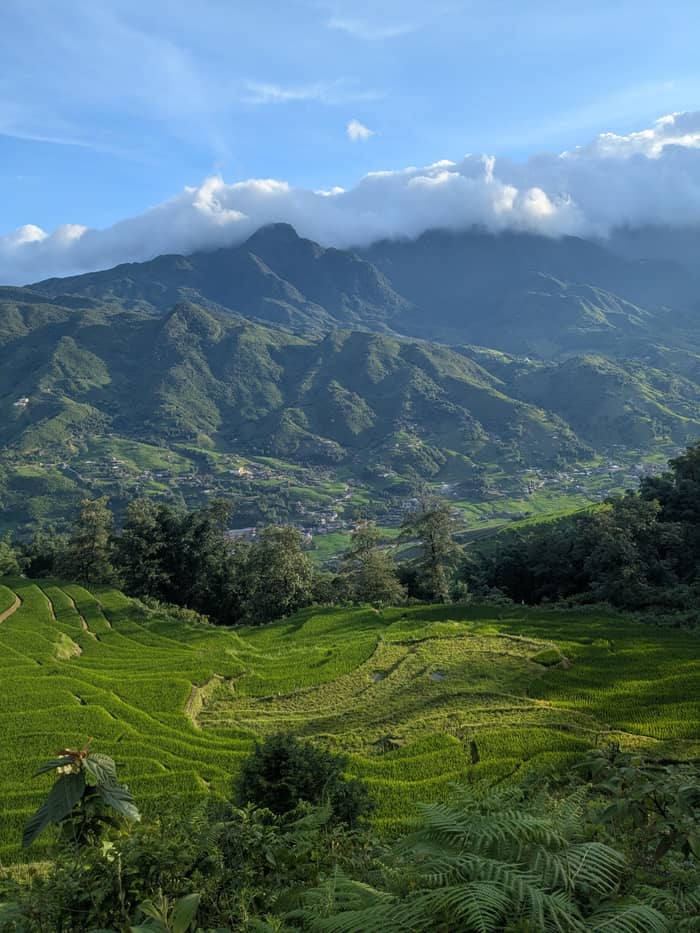
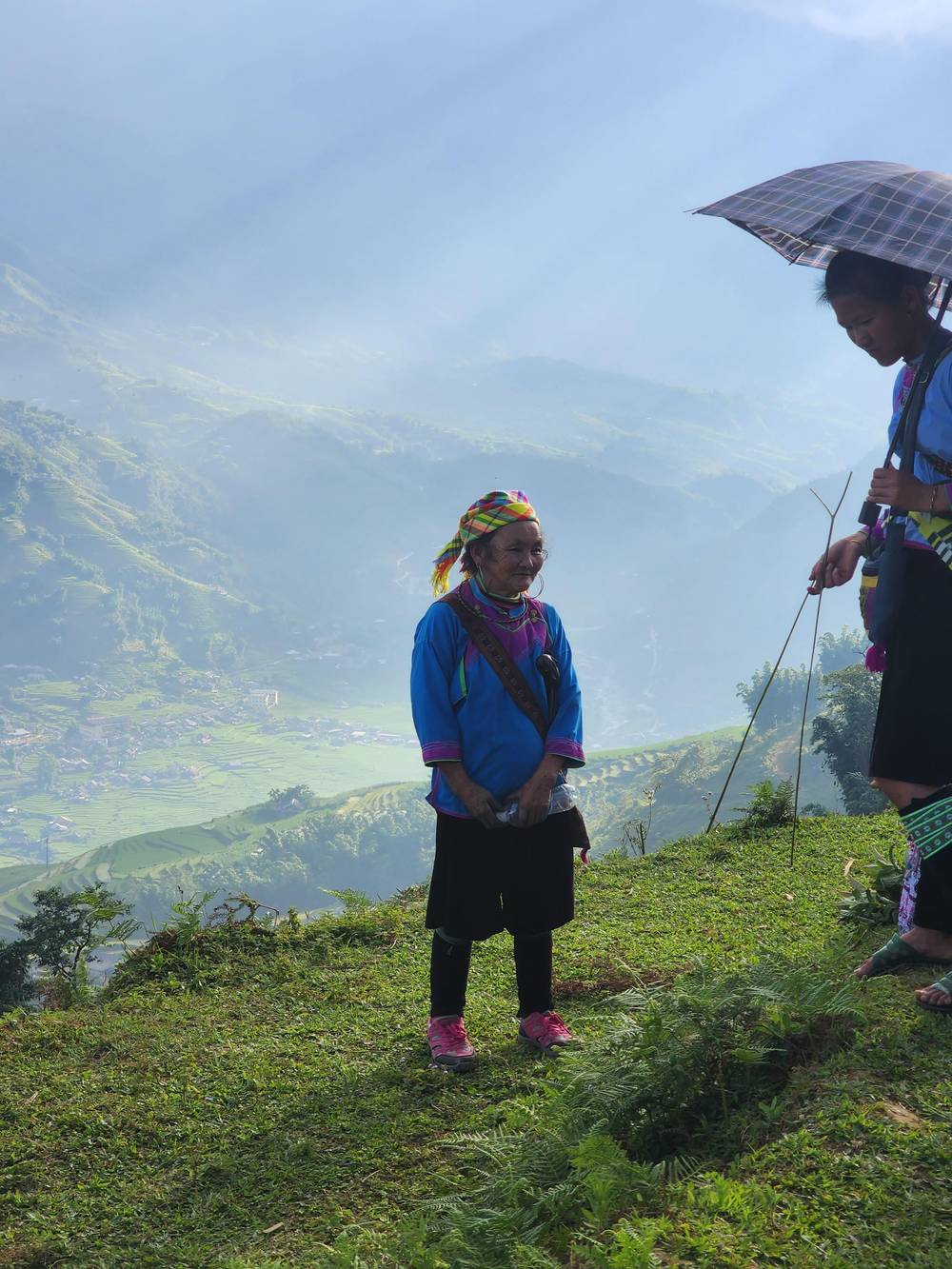
Hmong village Sapa trekking means, in practice, Black Hmong villages. According to the authority the Hmong in Vietnam form four subgroups, called White, Blue, Flowered and Black.2 In Sa Pa, it writes, Hmong villages are perched above lush, misty valleys, and hard conditions in the mountains have made the Hmong tough walkers and very capable trail guides.3 Some treks are led by Hmong guides, and one operator in the listings is run by a Hmong woman who leads the group herself.
Dress is where the community shows its craft. The authority describes the pride of a Black Hmong outfit as a shiny, sleeveless jacket of hemp polished to perfection, worn with beeswax batik skirts, and adds that Hmong girls learn embroidery early and, after marriage, are expected to sew for everyone in the family.18,19 In her own words a Black Hmong guide says her people weave their clothes from hemp and that one new outfit takes almost a year.20
Daily life is farmed and cooked at home. She adds that her neighbours raise their own food and cook it fresh on a fire, and that shamanism and herbal medicine are still part of the culture: her father is a shaman and her mother a herbal healer.21,22 She says the clothes are made to be worn at the festival each New Year.23 Treat these as a window into a living culture and not a performance staged for visitors.
Counting the community
The authority dates the Yao, also spelt Dao or Dzao, in Vietnam to the 13th century and counts them among the first settlers of the northern provinces of Lao Cai, Yen Bai and Ha Giang.32 Their long presence in the mountains is one reason their villages feel settled and rooted, with houses, altars and herb gardens that have been kept up for generations. VietnamPlus ranks the Red Dao second in Sa Pa town after the Hmong, easy to recognise by their colourful outfits.4 On the valley routes you meet them at Giang Ta Chai.
Red is the signature. The authority says Red Dao clothing is trimmed with red and white borders, the trousers carry embroidered motifs of family life and animist symbols, and the headdress is a triangular red turban.25 VietnamPlus adds that everything belonging to the Red Dao, from jewellery to the patterns on their houses, is red.33 A green valley makes that red easy to spot, and a polite request to the wearer is better than a long lens.
Herbal baths are a signature offering of the Dao. The authority tips a Yao herbal bath as the thing to try once the walking is done, and quotes VND 150,000 for roughly half an hour in a barrel at the Sa Pa-napro bathhouse.26,30 The Black Hmong guide adds that a visit to the baths with a Red Dao guide can continue with lunch at her house.34 Ta Phin, which has Red Dao and Mong families, is where that bathhouse stands.24,30
Your meeting
Say what interests you and read the matching walk.
If I want to understand Hmong life
A Hmong-led homestay trek
A Hmong-run 2-day trek starts from $41.
If I want to see a Giay hamlet
Ta Van on a day walk
A day walk names Ta Van as home of the Zay people, from $33.
If I want a Red Dao herbal bath
Ta Phin or a bathhouse
The authority recommends one after a hike, at VND 150,000 for half an hour.26,30
If I want the bus and the bed arranged
The booked trek
The booked trek starts from $72, with a night at the guide's house.
If I want to buy crafts
The Sa Pa market
A Black Hmong guide recommends the back and upstairs.31
Ways to meet them
Hmong
A guide who is also your host
Run locally
Hau Thao homestay
Dzay
Ta Van overnight
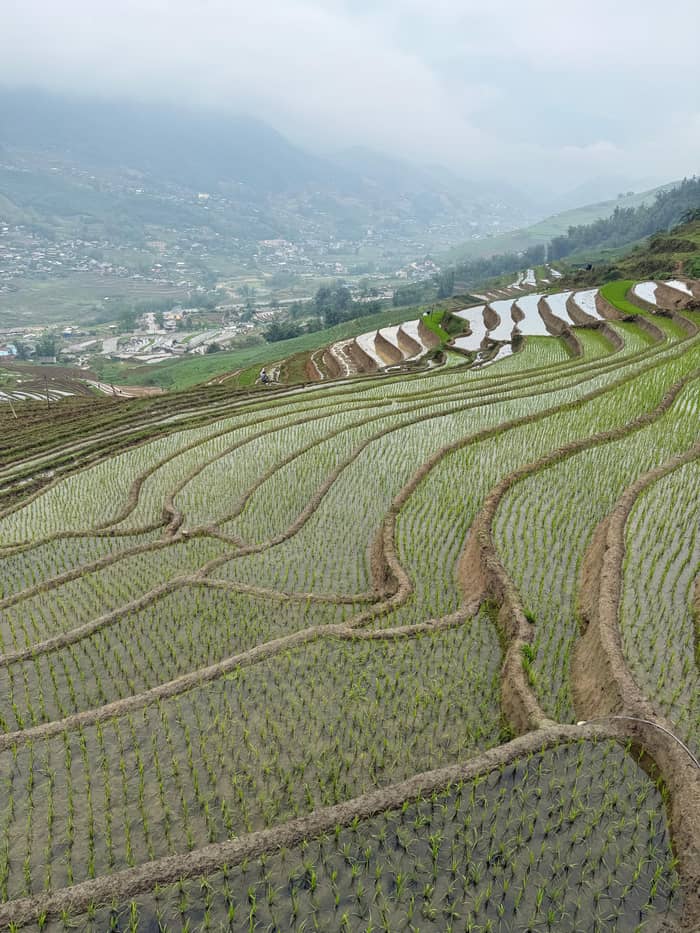
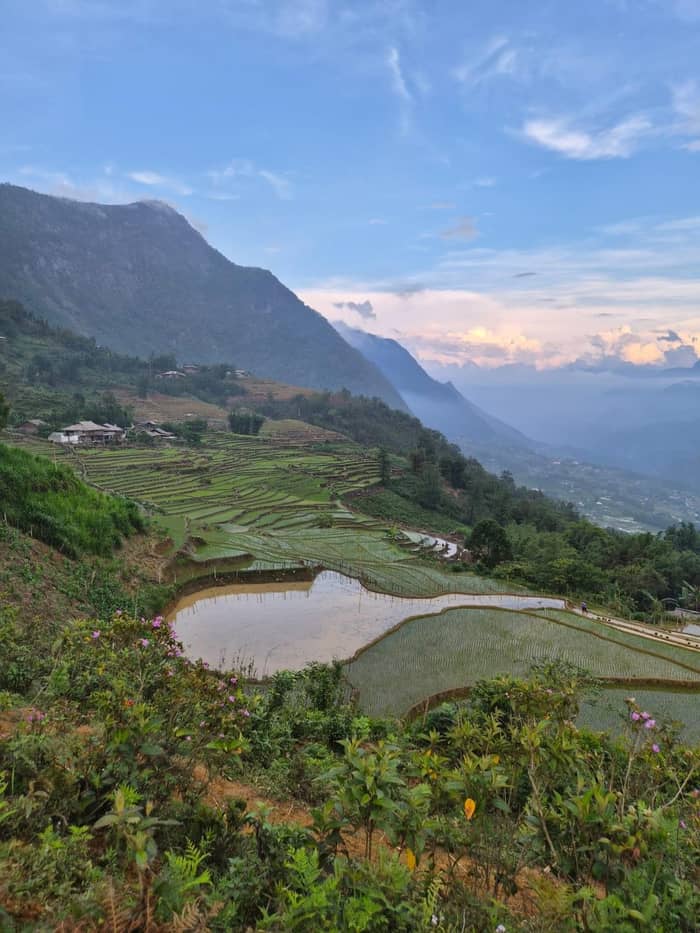
VOV puts the Giay at about 38,000 people, found mostly across Lao Cai, Ha Giang, Lai Chau and Cao Bang provinces.5 In the Muong Hoa valley the Giay hamlet of Ta Van holds about 140 households on sloping hillsides beside the fields, in ground-level and stilt houses whose ground floor centres on the ancestral altar and guest room.6,28 The name Ta Van, Nhan Dan notes, means a large curve.36
VOV also says Giay women make the clothes for the whole family, in plain costumes with a little embroidery at the neck and flaps, and that unlike Dao and Mong women, who sell brocade to tourists, Giay women do house and farm work and rarely leave their hamlet in their leisure time.27,37 That is a useful reminder that a quiet house is a family's home and not a shop, and that a knock needs an invitation.
Giay homestay is organised, not improvised. Nhan Dan counts upwards of 40 registered homestays among the 140 households of one Ta Van hamlet, and 154 across four communes, with one group there winning an ASEAN prize.38,39,40 The people who welcome you are also running a small business, and their hospitality is part of how they earn a living, which makes it no less genuine. Pay what is asked, and say thank you in the family's language if the guide teaches you the word.
Price a village visit
Add the size of your group and compare four village treks at their from-prices.
Compare 4 alternatives
Add the size of your group and compare four village treks at their from-prices.
≈
View≈
View≈
View≈
ViewAll amounts are from-prices on GetYourGuide, converted at the ECB reference rate. Exact prices are shown at booking.
A visit step by step
Arrival
Elders get the first greeting, with a right-handed handshake and a smile.14
At the door
Footwear stays outside the threshold.8
Inside
Do not step over a ground-level altar or walk directly in front of it.15
The gift
Hand over a small gift, and keep black out of it.16
Photographs
Ask before lifting your camera, and put it away on a no.7
Leaving
Tip the guide if the service warrants it, and thank the family.17
Ask before you photograph. Most people accept a picture, the authority writes, but privacy comes first and the camera should never be raised without a word, and if the answer is no, the lens cap goes back on.7 A valley listing adds a rule for children: get a parent's permission first, and never touch a child's head. A guide can introduce you and make the request easy, and a smile and a gesture can settle it.
Houses have rules, and they are short. The homestay guide on this site sets out the house manners in full: shoes off at the door, elders greeted first, a right-handed handshake and a wide berth around any altar on the floor.8,14,15 Follow the guide's lead on everything else, and copy what the family does. The gift list is short, and the one thing to avoid is anything black.16 Sweets for children are best left to the guide's judgement.
Respect the work. A trek crosses fields that are someone's livelihood, so stay on the paths, close any gate you open and never pick the crop. If you want to join in, a Black Hmong guide says visitors in the right season can help plant rice and process crops.34 Keep your voice low near houses, and do not hand out money or gifts to children on the path, which is a decision for the village and the guide.
Video
Dalton Rhone on YouTube · Tap play to load the video; not before.
most people will be fine with you taking their photo, but respect their privacy and always ask before you lift up your camera
Buy where there is time. A Black Hmong guide points to the back and upper floor of the Sa Pa market, a section for local women, for the best souvenirs, and suggests asking how long an item took to make before you agree a fair price.31 She says buying from the women who walk around town can feel rushed, while the market gives time to browse.41 A costume may take months to make, the authority adds, so a fair price is rarely a low one.35
Tip with thought. The authority puts tips mainly with guides and spas rather than restaurants, and stresses that none is required.17 If your guide has given you a family evening and a long day, a tip is a fair thanks, handed over quietly at the end of the trek and not in front of the group. For the host, a gift on arrival and a kind word on leaving are the usual gestures, and your guide can tell you what is usual on the day.
Money should reach the families. The authority says that a night with an ethnic family supplements what farming brings in; some homestays also run workshops that feed the village purse, and locally owned companies are the ones it recommends.42,43,44 Prefer a trek where the operator can tell you which family hosts you and how it is paid. Markets are another honest place to spend, and the authority singles out the small Sunday market at Muong Hum.45
FAQ
The authority says to ask before lifting your camera and to respect privacy.7
The authority advises this and says never to bring anything black.16
The authority gives this price for the Sa Pa-napro bathhouse in Ta Phin.30
The authority says tipping is more usual for guides than in restaurants, and is not an obligation.17
Sources
Planning two days in the Sa Pa hills? Ask a real person here.