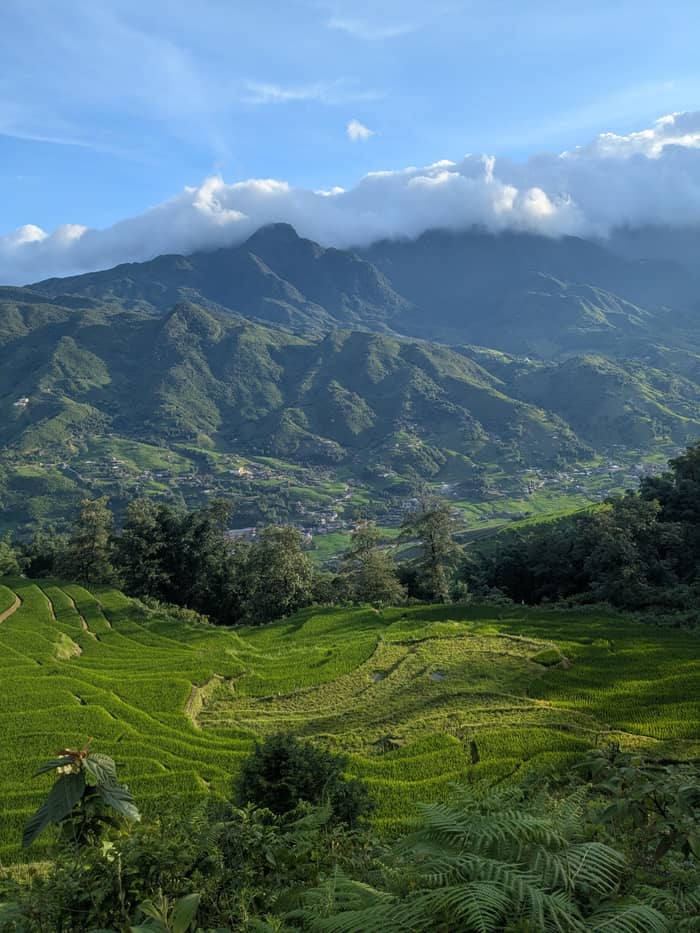
Easier
Gentle half-day
Y Linh Ho to Ta Van
- Time4.5 hours
- DistanceAbout 9 km
- PickupIncluded
- ReturnsBy bus
Guides
Language
Currency
See open datesfrom $72 · free to cancelHands-on checklist
10-item checklist
Mark each item when done. Progress is stored on this device.
0 / 10 ready
Everything is ready. Pick your date for the valley, and the rest is settled.
Save a placeDistances and hours from the listings, what wet paths do, who should think twice, how the second day feels and what a tired walker can do about it.
Editorial team, sapa2daytrek.top · Updated November 17, 2026 · Allow 8 min
Overview
Is trekking in Sapa difficult? For a walker who can manage a long day on foot, not very, but it is not a stroll either. The national tourism authority says Sa Pa has trails for everyone and advises walkers to pace themselves and enjoy the view.1 The listings are blunter: the 5-hour day walk to Lao Chai and Ta Van is graded a moderate trekking activity, while a 6-hour valley trek is called challenging when the ground is wet.
Sapa trekking difficulty is easiest to judge in hours and kilometres, and the booked trek sits in the middle of that range. Its first day is a guided hike of 12 km through terraced rice, corn and potato fields, with a stop at a waterfall, and its second day offers a choice between a hike to more villages and a bamboo forest or time on the fields. The listings checked grade effort in words (moderate, moderate-high, moderate to challenging) and do not publish ascent figures, so ask the operator for the climb of your own route.
Fitness is the first variable and the group is the second. A 1-day Lao Chai trek wants moderate-high fitness, and a 2-day trek from town asks only for a basic level on 6 to 12 km a day, so the same villages are graded differently by different operators. Treat the grades as a range: a regular walker who has done a long hike will be at ease, while someone who rarely walks more than an hour should plan for effort and for aching legs on the next morning.
Effort by option
| Option | Distance | Time on foot | What the listing says |
|---|---|---|---|
| Half-day walk | About 9 km | 4.5 hours | Y Linh Ho, Lao Chai, Ta Van |
| Day walk | 12 km | 1 day | Moderate-high fitness |
| Valley trek | 10 km | 6 hours | Challenging when wet |
| Booked trek, day 1 | 12 km | Afternoon | Shoes with grip |
| Small-group trek | About 18 km in all | 2 days | Steep and uneven terrain |
| Hmong-run trek | 6 to 12 km a day | 2 days | Basic fitness advised |
Distances and grades are exactly as each cited listing states them; the listings do not publish ascent figures.
The numbers are modest on paper. A half-day walk to Lao Chai and Ta Van is about 9 km and lasts 4.5 hours, a day walk takes 5 hours, and the valley trek takes 6 hours over 10 km. A longer day trek from town gives 6.5 hours in Hau Thao village and a further 2.5 hours on foot, with a 30-minute car ride back to Sa Pa. Hours matter more than kilometres here because paths wind, stop at villages and slow down on wet stone, and a guide's pace is not the pace of a map.
Slopes are the second number. A resident quoted by VOV says the mountains of the valley are gently sloping and easy to walk, like doing exercise, and the authority says Sa Pa has trails for every kind of trekker.2,3 The climbs in the listings are short but real: a 2-day listing climbs 2 km uphill to Ham Rong Mountain at 2,000 m on its first morning, and a 1-day listing climbs 1 km to the top of Sa Seng in about an hour.
Altitude adds little to the effort but a lot to the weather. VietnamPlus puts Sa Pa at 1,500 to 1,800 m and VOV sets the valley floor near 1,000 m, so a long descent into the valley is followed by a climb back out to the road.4,5 A listing that finishes with a climb uphill to the main road, where the driver waits, shows how a day can end on a hill. Ask which direction your route runs, and how much of the climb comes at the end.
Hours on foot
Timings as listed: the half-day walk, the day walk, the valley trek, the long day trek and a 2-day listing.
Sapa trekking muddy trails rain is the combination that changes the grade for everyone, from the fittest walker to the one who has trained least. The listing for the booked trek flags slippery stretches and recommends trekking shoes over anything else. The 6-hour valley trek warns that its 10 km turn hard after rain, and a sister listing for the same valley tells senior citizens to skip it, since a wet day can make the route dangerous.
Rain is a regular part of the year here. Rain is heaviest from May to August in VNA's reporting, with the seasonal guide putting the storms between June and August.6,7 If you walk in those months, expect wet earth, wet stones and streams that run higher, and give the day more time than the listing's hours suggest. A 3-day trip rents boots on site and advises a raincoat or poncho, and a 2-day listing asks for hiking shoes and a light raincoat.
Leeches and ticks are part of walking through undergrowth. For forest walking the authority names ticks, leeches and venomous snakes as hazards and says to get medical help immediately after a bite, and it recommends a DEET repellent and light long sleeves at dusk.8,9 These warnings are general, not specific to Sa Pa, but they apply to any path through the forest. Stay on the path your guide chooses and tuck trousers into socks on wet days. Check your ankles and calves at the end of the day, and shower with the repellent still in mind.
Your level
Choose the statement that sounds most like you and the matching walk follows.
If I walk a few times a month
The booked overnight trek
A guided hike of 12 km on day 1 and a gentler choice on day 2, from $72.
If I rarely walk more than an hour
A half-day walk
About 9 km in 4.5 hours, from $21.
If I want a long day but no night away
The valley trek
A 6-hour trek over 10 km, from $23.
If I am older or have a weak knee
A shorter option, and ask first
One listing advises seniors not to do its 10 km trek.
If I am travelling with a toddler
Check the small print
Children under 3 join one 2-day trek for free, but some listings exclude under 6.
Levels of effort
Easier
Y Linh Ho to Ta Van
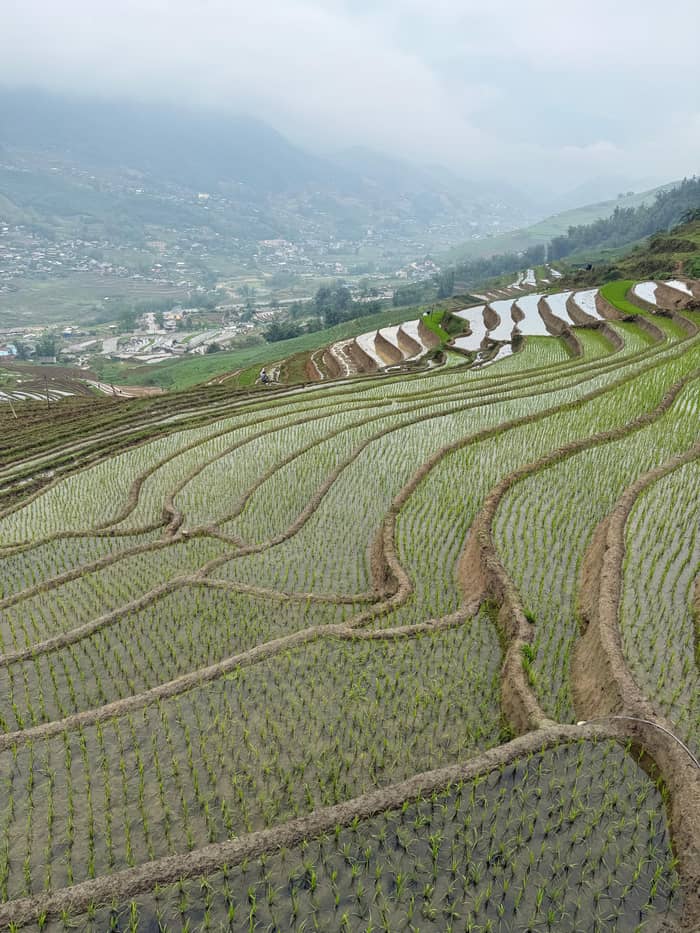
Challenging
Y Linh Ho to Giang Ta Chai
Booked here
Hanoi sleeper bus both ways
The second morning is the real test of fitness, because the legs that felt fine at dinner report in at breakfast. Breakfast on the booked trek is cooked with the host, after which you pick a longer hike or a stretch on the fields, which hands a tired walker a gentler option. Other listings are firmer: a 2-day trek covers 5 km to Giang Ta Chai on its second day, and another covers 7 to 8 km in about 4 hours. A third gives 8 km on dirt tracks.
How a total of about 18 km over 2 days is split decides how it feels. A small-group listing puts 9 to 11 km on day 1 in about 5.5 hours and 7 to 8 km on day 2 in about 4 hours, and lets guests choose a shorter or longer walking option each day. Compare that with a first day of 12 km on the booked trek: the second day starts with a rest and a meal in between. Whichever shape you choose, the second morning is the one to ask about before you pay, since it is the day on which a tired group most needs a plan.
The downhill is the part knees notice. The routes descend into the valley and climb to a road at the end, so training on slopes helps more than training on flat roads. Poles are optional and the listings do not mention them. Day 2 of the booked trek ends with a shuttle back to town and free time in the market before the 15:00 bus. Walk slowly, drink water, and eat the lunch you are given: a steady pace carries a tired walker further than a fast start does.
Pick your level
Enter how many walkers there are and compare four walks at their from-prices.
Compare 4 alternatives
Enter how many walkers there are and compare four walks at their from-prices.
≈
View≈
View≈
View≈
ViewAll amounts are from-prices on GetYourGuide, converted at the ECB reference rate. Exact prices are shown at booking.
Energy across the trek
Early bus
The pickup window opens at 6:00 AM and closes at 6:45 AM, so the hard part starts after a morning of sitting.
After lunch
A guided hike of 12 km follows lunch in Sa Pa town, past Ylinh Ho, San Seng and Hau Thao.
Waterfall break
The route stops at a waterfall before it reaches the guide's house.
Evening
Dinner and the night at the house, with a shared bathroom, repair the legs.
Morning after
You pick a longer hike or a quiet spell on the fields.
Afternoon
A shuttle returns the group to town, and the bus for Hanoi leaves at 15:00.
Listings set limits, and they differ. A 6-hour valley trek, a sister listing and a 2-day listing all rule out children under 6 and disabled walkers. One small-group listing lets children under 3 join free but calls its terrain steep and uneven. A Hmong-run 2-day trek is not recommended for guests with limited mobility. Read the exclusions on the page of the listing you book, and write to the operator if your case is unclear.
Older walkers should read the small print. One listing advises senior citizens not to take its 10 km trek, and a limousine package says the 9 to 12 km walk on day 2 is challenging for older guests, with an alternative visit arranged if you do not want to do it, at your own ticket and transport cost. Fitness, not age, decides how the walk goes, but the operators set the rules, so ask them directly, in writing, before you pay, and keep their answer with your booking.
Families can still enjoy the valley with a shorter plan. A half-day walk of about 9 km and 4.5 hours is the least demanding option among the listings checked, and a flexible listing offers a standard or extended walk scaled to your fitness. The authority adds that Cat Cat and Ta Phin are villages a visitor can see unguided, a lighter outing for a family day.12 Nothing says a child must do the whole trek, and the shorter outings give younger walkers a real taste of the villages.
Video
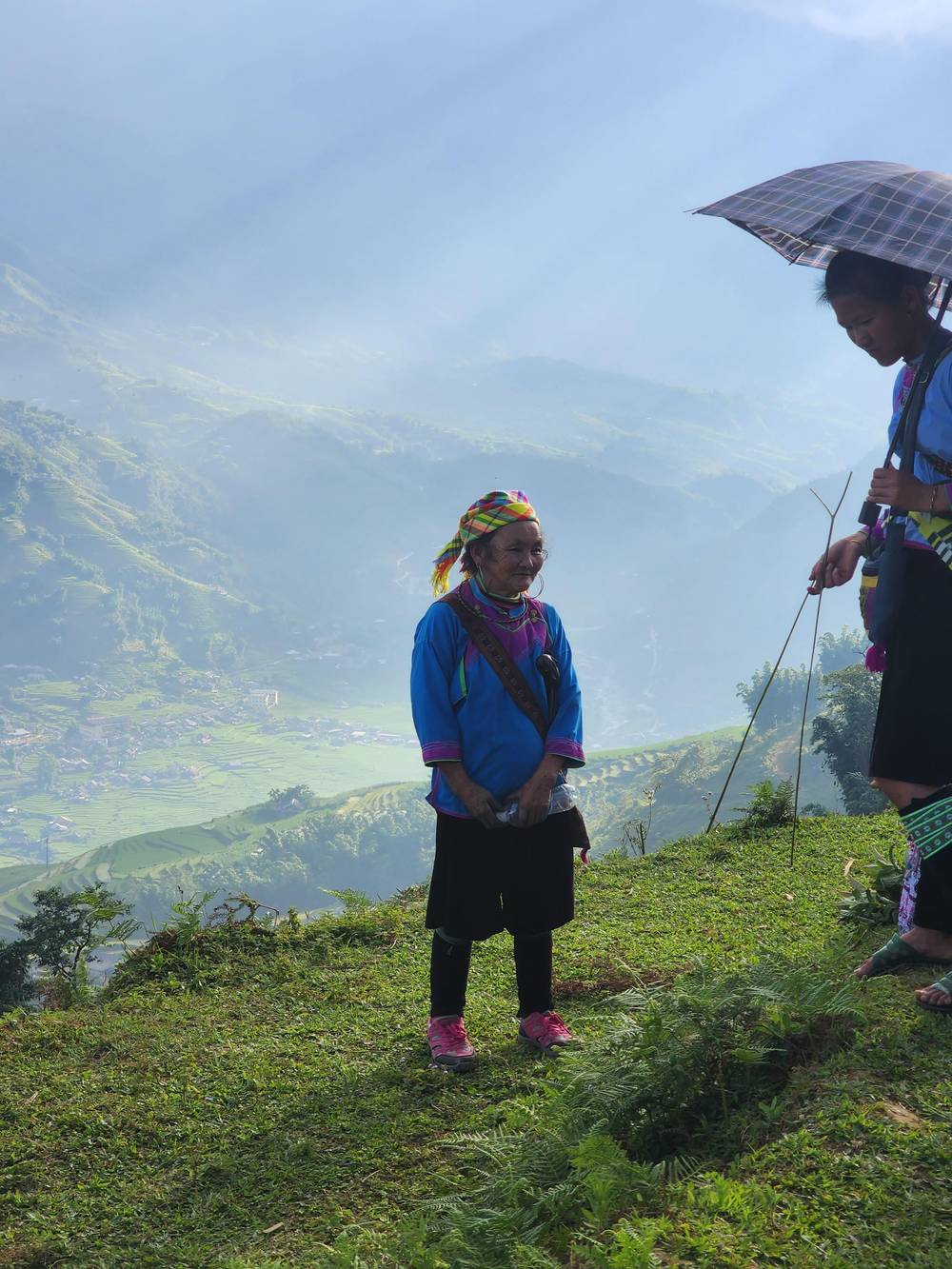
Alex Travels Far on YouTube · Tap play to load the video; not before.
Sa Pa has trails for everyone. Pace yourself and enjoy the view.
Preparation does not need a plan, only a few weeks of walking. Walk for a long evening with the daypack you will carry, include a hill, and break in your shoes. Aim to finish those walks tired but not injured. If you take medication, bring enough for the whole trip, as the authority cautions that certain drugs are scarce locally.13 Pack a small kit for blisters as well, and tape a hot spot early instead of finishing the day on it.
Know your exits before you need them. A small-group listing says a car is always available if you feel tired, and another allows a shorter or longer walking option each day. The booked trek has a shuttle bus on day 2, and its listing lets the guide hold the group in town during severe weather and drive it to the homestay, with a longer second day once things clear. Tell the guide early if you slow down, because the options shrink once you are far from the road.
Insurance, water and nerves complete the list. Insurance is the authority's first piece of advice, and it warns that help can be a long way off in the countryside.10,14 Its water rule is simple: bottled only, and no ice in rural places.11 Treat this guide as one source among several and never as a promise about safety: ask your operator about the route, the group size, the guide's first-aid training and what happens if you cannot continue.
FAQ
The authority says Sa Pa has trails for everyone, and one listing keeps a car on hand for anyone who tires.1
A small-group listing totals about 18 km over 2 days, and the booked trek has a 12 km first day.
The booked trek warns of slippery stretches, and a valley listing calls its 10 km challenging in wet weather.
Several listings rule out children under 6, while one lets children under 3 join free.
One listing advises seniors against its 10 km trek, and another calls the day-2 walk challenging for older guests.
A small-group listing keeps a car available, and the booked trek has a shuttle bus on day 2.
Yes: the booked trek's listing recommends trekking shoes for slippery paths.
Sources
Planning two days in the Sa Pa hills? Ask a real person here.