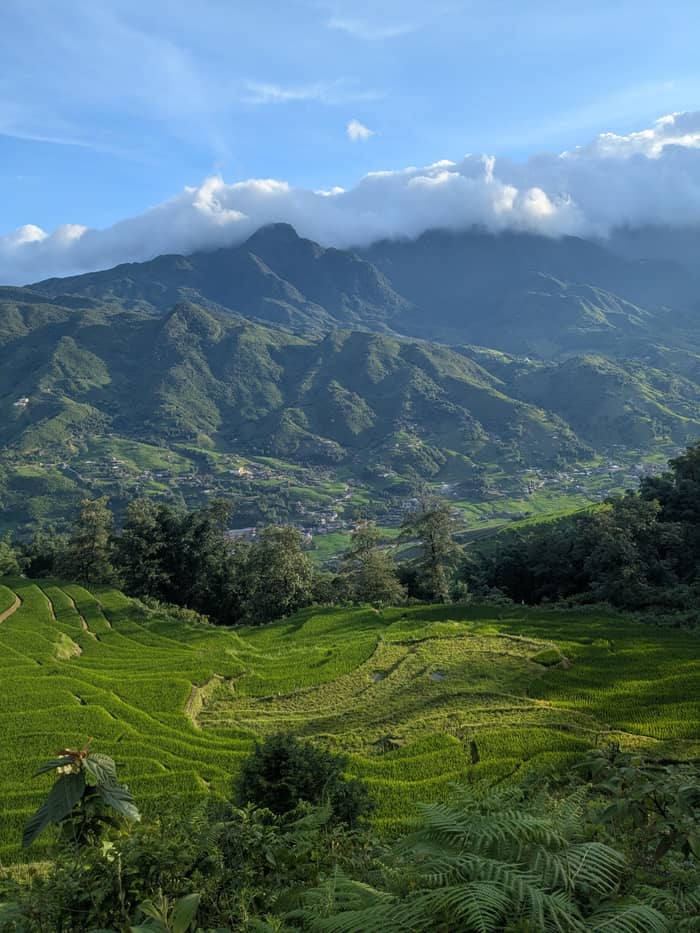
Spring
Wet-season fields
Late April to mid-May
See the trekGuides
Language
Currency
See open datesfrom $72 · free to cancelMake-your-mind-up tool
Two questions, one month
Say when you can travel and what you want from the weather, and the trek that fits appears with its starting price.
Best match for you
from $72
Two days and a homestay night from Hanoi with the sleeper bus both ways, timed for the weeks when the terraces turn golden.
Best match for you
from $34
A 12 km day through Lao Chai and Ta Van with lunch at a villager's home, up to 12 guests, for the weeks of flooded terraces.
Best match for you
from $24
A 6-hour, 10 km trek through the Muong Hoa valley with pickup included and a group of up to 11.
Best match for you
from $41
A 2-day trek from Sa Pa town with a homestay night; the listing advises a warm jacket for the cool nights from November to February.
Water in spring, gold in early autumn, fog and cold in winter: what the official sources say about each stage of the terraces and the weather you will walk through.
Editorial team, sapa2daytrek.top · Updated November 17, 2026 · Allow 9 min
Overview
The rice terraces are a farm, not a monument, so what you see depends on the farming calendar. The national tourism authority describes Sa Pa as a town at the top of a deep valley whose terraces are worked to this day, and it names autumn, from September to November, as the season of gold fields beneath clear skies.8,1 A trek on the right week and a trek a month earlier follow the same path and show two different valleys.
The authority's terrace guide narrows the window. It puts the best moment for Sa Pa in the weeks just before the harvest, with clear skies and fine views from mid-August to early September.2 Sapa rice terraces trekking is therefore best planned around that run of late-summer weeks, with a fallback in early October, which the authority calls lovely as the tiered paddies turn golden just before harvest.9
Other state sources frame the same weeks slightly differently, and they should be read as a range, not as a promise. Nhan Dan sets the rice season in Sa Pa at roughly mid-August through October, and Viet Nam News calls September the rice harvest season in the Muong Hoa valley.10,11 The sources differ by a few weeks, so read their dates as a window and not as a deadline, and ask the guide what the fields near the village are doing that week.
Month by month
| Months | Weather guide | The terraces | On the trek |
|---|---|---|---|
| December to March | Chilly, misty, cloudy6 | No description in the sources used | Warm clothes needed |
| April to mid-May | Warm, clear, sunny18 | Flooded wet-season fields3 | Late April is near-perfect19 |
| Late May to August | Warm, then stormy and humid18,5 | Green, with much rain4 | Slippery paths |
| Late August to mid-September | Stormy until August, then cool and dry5,20 | Gold begins to show12 | Holiday surcharges |
| September | Cool, clear, dry20 | Harvest season11 | Busiest weeks21 |
| October | Cool, clear, dry20 | Golden before harvest9 | Lovely early month9 |
| November | Cool, clear, dry20 | Season winding down10 | Cool nights |
Weather blocks are the national tourism authority's; the terrace column follows the cited reports, and sources differ by a few weeks.
The year starts with water. VietnamPlus says visitors go to Lao Cai every May to see the terraced fields around Sa Pa in the wet season, and it advises a visit between late April and mid-May to capture the scene.13,3 In those weeks the fields are flooded and seedlings are young, so the slopes read as stepped mirrors of sky instead of as crops. A stepped field full of water gives the camera a mirror, and young seedlings give the slopes a soft, even colour.
Summer is the wet, green stretch. The same VNA coverage notes that from May to August there is a lot of rain, and the tourism authority lists June to August as stormy, warm and humid.4,5 Rice grows tall in that stretch of the year, and the valley is at its greenest when it is not hidden in cloud. Waterfalls run strongly, though a listing for a 2-day trek warns that a waterfall's flow depends on the season and may be light in the dry months.
Gold comes in late summer. VietnamPlus dates the golden colour at Ta Phin from late August to mid-September, and a VNA report on an autumn festival puts the golden ripening in Muong Hoa from 22 August to 6 September in the year of that event.12,14 Harvest follows. If you want to join a field, a Black Hmong guide says visitors who come in the right season can help with planting rice and processing crops.15
Height above the sea
The authority's seasonal guide splits the year in Sa Pa into weather blocks: a chilly, misty, cloudy winter spell from December to March; warm, clear, sunny weather in April to June; a stormy, warm, humid summer between June and August; and cool, clear, dry weather from September to November.6,18,5,20 Sapa trekking autumn is the dry end of that cycle, and the year divides into a clear spring, a stormy summer, a dry autumn and a misty winter, with no month that is wet and cold at once.
Two months are picked out by name. Late April earns the authority's phrase near-perfect, with flowers in bloom and clear skies, and early October its word lovely.19,9 VietnamPlus places the town at 1,500 to 1,800 m, with a mean temperature in the range of 15 to 18 degrees Celsius.17 Do not carry Hanoi's temperatures with you. The authority's weather page makes the point that northern hill destinations such as Sa Pa are far cooler than elsewhere in Vietnam, with late December to March the coldest spell.24
Averages hide the mornings. In one report VNA gave 7.7 degrees Celsius for an early December morning in Sa Pa, the coldest of that winter to date, and in another the Sa Pa meteorological station logged 9.2 degrees at 7 AM as a January cold front passed.25,26 The booked trek spends a night in a village house, so pack for readings like these and not only for the afternoon's walk. Layers beat a single heavy coat: a base layer, a fleece and a shell let you adjust as the sun rises and the path climbs.
Windows in the year
Spring
Late April to mid-May
See the trek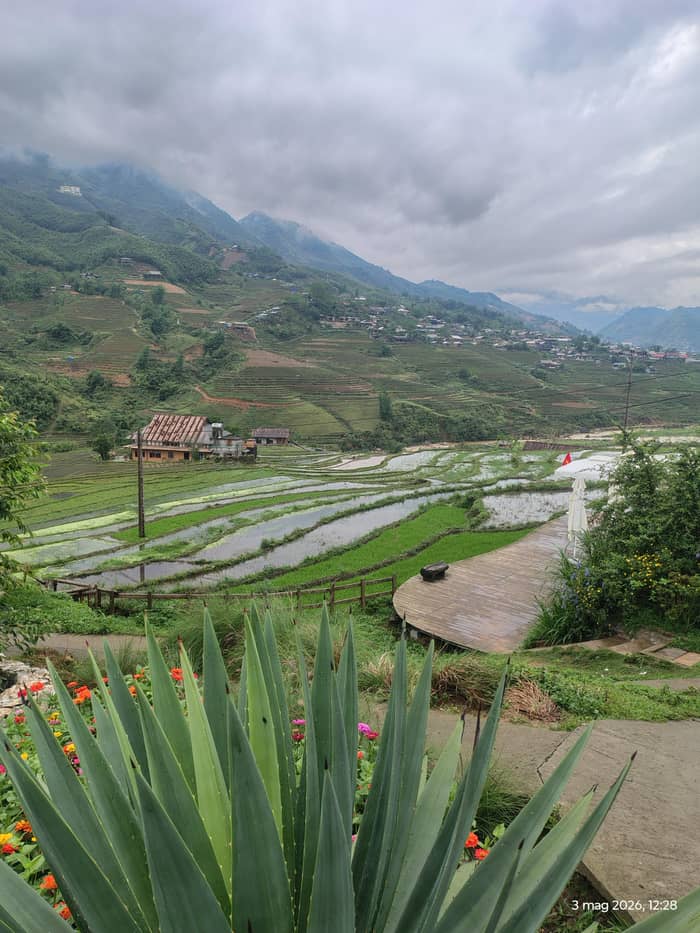
Autumn
Mid-August to early October
See the trek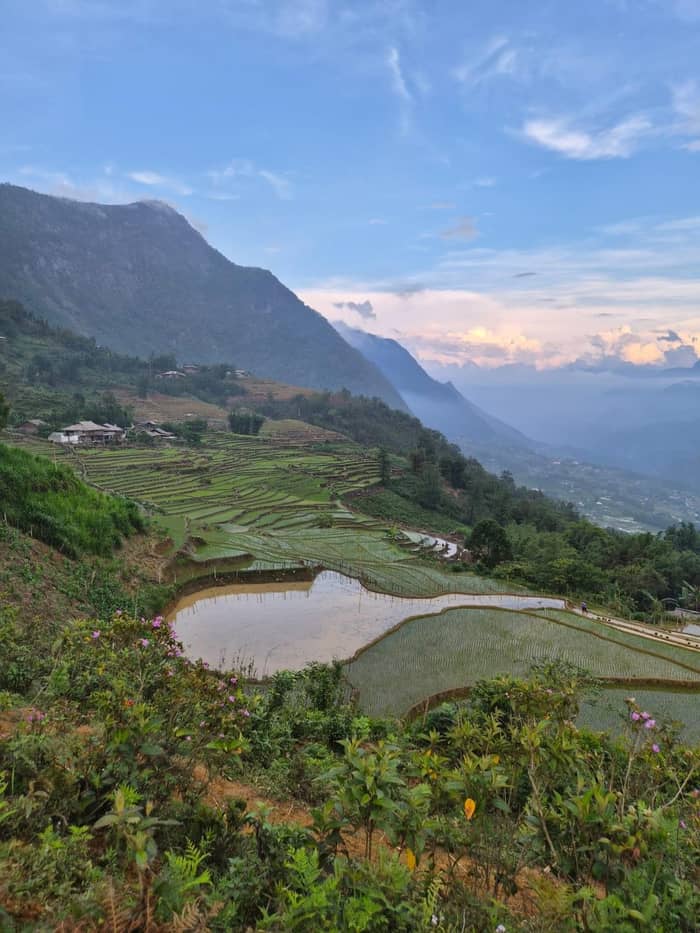
Winter
December to March
See the trekFog is part of Sa Pa's character as well as part of its risk, and it is worth understanding before you plan the second morning. The authority sums the climate up as cool throughout the year, with foggy dawns, a cold winter and a little frost near the summit of Fansipan, and VNA writes that, wrapped in drifting cloud, Sa Pa looks like a city in the fog.30,31 A resident interviewed by VOV describes the valley at dawn as full of white fog and cloud, like rolls of cotton.28
Fog is not a reason to cancel a trek, but it changes the plan. Viet Nam News gives a tip for such days: the best way to enjoy the terraces in fog is to view them from above, choosing a spot halfway up the mountain.23 A guide who knows the paths can lead you to such a spot. A day with no view still gives you the village paths, the stream and the family meal, and the clouds themselves are part of the picture the authority describes.
Read the forecast before you book, and ask what happens if it turns. The booked trek states that in severe weather the guide may wait for better conditions in Sa Pa town, move guests by minivan to the homestay and lengthen the second day's route. That is a plan for a bad day, not a refund for a foggy one. Ask which situations the operator treats as severe before you pay, and how much notice you get if the plan changes.
Price your dates
Pick a party size to see four treks priced for your dates.
Compare 4 alternatives
Pick a party size to see four treks priced for your dates.
≈
View≈
View≈
View≈
ViewAll amounts are from-prices on GetYourGuide, converted at the ECB reference rate. Exact prices are shown at booking.
The terrace year
Late spring
VietnamPlus advises late April to mid-May for the wet-season fields.3
Summer
From May to August there is a lot of rain, and June to August is stormy, warm and humid.4,5
Late summer
Ta Phin goes gold from late August into mid-September.12
Harvest
September is rice harvest season in the Muong Hoa valley.11
Early autumn
Early October is lovely as the paddies turn golden just before harvest.9
Winter
December to March is chilly, misty and cloudy.6
Wet weather changes the surface far more than the view. A 6-hour valley trek on one listing is called challenging in wet weather, and another listing for the same valley advises older travellers to skip the 10 km walk because it can be dangerous when wet. Paths in the terraces are earth and stone; in the rainy months they turn slick, and a pair of shoes with real tread is the item that counts most.
Storm weeks are different again. After days of heavy rain from Typhoon Bualoi, the provincial tourism department told all providers to stop tours to at-risk areas until further notice and asked operators to contact affected tourists, who should agree on cancellations, postponements or rescheduling.29,32 In an earlier storm a landslide in Muong Hoa commune buried 17 people, of whom six died.33 Such events are the reason to check the forecast and your operator the evening before you set out.
The stormy block of the weather guide, June to August, is the season to plan most flexibly.5 Nothing in the official guidance tells you to avoid those months, only to be ready to change the plan. If a storm closes the tours, your protection is the booking's cancellation terms and the operator's honesty, not a rule about the calendar. Travel insurance is advised by the authority for any trip to Vietnam.27
Video
Seniworld Travel on YouTube · Tap play to load the video; not before.
the best way to enjoy this unique specialty of the town in fog is to view it from above, choosing a mid-mountain spot to appreciate this magical green trail.
Season checklist
Winter is the quiet season. The authority describes December to March as chilly, misty and cloudy, adds that Sa Pa sees occasional snowfall in January, and says hotels have heated blankets while local spas offer herbal baths to warm up.6,7,22 VNA notes that lucky visitors in the cold season may see snow fall in Sa Pa.34 The sources used here give no description of the winter fields, so treat the cold months as a season for mist, markets and warm food. Winter days are short, so ask when the walk is due to finish and whether anything is planned after dark.
Packing follows the records, and the records agree: warm layers are expected for much of the year. A 6-hour valley listing recommends warm clothes from October to March, while a 2-day listing warns of cool nights between November and February and suggests a warm jacket. The booked trek spends its night in a house, not a hotel, so ask whether blankets are provided and bring a warm layer regardless.
Cold nights are also the season of herbal baths. A Red Dao herbal bath is the authority's tip for sore legs after a hike near Sa Pa or Lao Cai, and its FAQ lists the bath among the things to do besides trekking.35,36 After a winter walk, a hot soak is a practical end to the day, and a bath in a Red Dao village adds a cultural stop to the afternoon, which makes a cold spell something to plan around rather than something to fear.
Seasons move demand, not the from-price, and the Sapa trekking season is long enough that dates can bend to your calendar. The listings in this guide show from-prices that do not depend on the month; what the records do state are surcharges tied to named holidays. A 3-day trip applies 40% at Tet and around 29 April to 1 May and 30 August to 2 September, and a premium package lists extra fees on peak dates that include 31 August to 2 September. The golden weeks of late summer overlap with that national holiday, so check the dates on the booking page.
Crowds are a fair thing to weigh as well. VNA counts more than 3.55 million visitors in Sa Pa in the first nine months of 2026, which means the town is busy for much of the year and no month is truly empty.21 A weekday in the first half of September, when the gold is building but the holiday has not started, is a sensible target if your dates are flexible, and a midweek date is easier to plan around than a holiday weekend.
A short rule helps. For gold, travel from mid-August to early October; for flooded fields, late April to mid-May; for clear skies and cool air, September to November or April to June; for mist and a quiet town, winter. Try the quiz above, which turns those wishes into a trek, and read the table below, which sets the months side by side so you can see every trade you make. The cards then show the clearest windows with their trade-offs.1,3
FAQ
Heavy rain falls from May to August, and wet paths are called challenging on the valley listings.4
The listings checked state surcharges for named holidays, including 30 August to 2 September.
Sources
Planning two days in the Sa Pa hills? Ask a real person here.