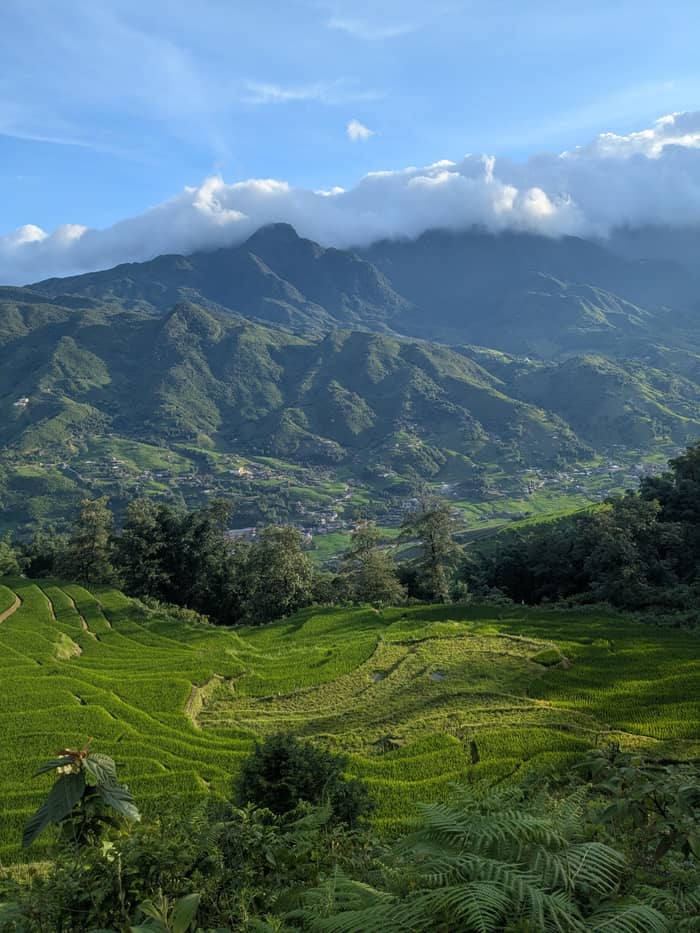
Day
Valley day trek
6 hours in the valley
- ShoesTrekking shoes
- SunSunscreen, glasses
- BugsRepellent
- WarmthOctober to March
Guides
Language
Currency
See open datesfrom $72 · free to cancelHands-on checklist
11-item checklist
Mark each item when done. Progress is stored on this device.
0 / 11 ready
Everything is ready. Pick your date for the valley, and the rest is settled.
Save a placeOne small pack, a pair of shoes with grip and a warm layer: what the listings and the national tourism authority say to bring, what the tour already covers and what stays in Hanoi.
Editorial team, sapa2daytrek.top · Updated November 17, 2026 · Allow 7 min
Overview
Sapa trekking tips begin with what you do not have to carry. On the booked trek the guide, the bed, the local meals and the sleeper bus are in the fare, and the big bag stays in safe storage in Sa Pa town while you walk without it. A Hmong-run listing does the same, leaving your big bag at a hotel and asking for only the essentials on the trail. You are packing a small day pack for one night, not a suitcase.
A small-group listing gives the most practical shopping list: for the day it asks for water, sunscreen and mosquito spray, plus clothes you can walk in. Everything you need on the trail fits in a pack the size of a school bag, and everything you need at the house fits in the same bag with a layer or two on top. The rest of this page adjusts that list to the season. If your bag is big enough to need both hands, it will slow you down on the first slippery stretch, and the sleeper bus does not need it.
Anyone asking what to bring on a 3 day hiking trip can use the same list, with a spare pair of socks and a second dry top, because the 3-day Sapa trek in the listings adds a hotel night in Sa Pa town to a homestay night in Ta Van. For this trek, one night away means one change of clothes, one layer for the evening and one set of toiletries. Pack the pack, lift it, and walk around your room before you leave Hanoi.
The packing table
| Item | When it matters | What the source says |
|---|---|---|
| Trekking shoes | Every trek | Best because paths can be slippery |
| Raincoat or poncho | Wet months, May to August | Advised on a 3-day listing |
| Warm jacket | Nights from November to February | Advised on a 2-day listing |
| Sunscreen and sunglasses | Clear days | Asked for on a valley listing |
| Insect repellent with DEET | Dusk and forest sections | The authority's advice8 |
| Vietnamese dong in cash | The whole trip | Banking can be unreliable |
| Prescribed medicine | The whole trip | Hard to find in Vietnam9 |
| A small gift | The homestay evening | Biscuits, fruit or flowers10 |
Each row restates the cited source; no listing states a weight limit for the pack.
Shoes come first. The booked trek's listing says the path may be slippery in places and names trekking shoes as the best choice, and a valley listing asks for trekking shoes, sunglasses, sunscreen and insect repellent. A Hmong-run trek asks for comfortable hiking shoes and a light raincoat, since Sa Pa weather can change quickly. Trainers with a smooth sole are the wrong choice on wet earth.
For the rainy months, add more. A 3-day listing recommends waterproof shoes or plastic boots if it rains, says boots can be rented on site, and asks for a raincoat or poncho. Sapa trekking rainy season planning begins with the calendar, since a lot of rain falls between May and August on VietnamPlus's account, and the authority's seasonal guide has storms through the summer months.2,3 A poncho that covers the pack as well as you is worth more than a small umbrella.
Socks matter more than the packing lists suggest. Wet feet blister quickly, so carry a spare pair in a dry bag and swap them once you reach the house. Tape any hot spot before it opens. Because the authority lists ticks, leeches and poisonous snakes among the hazards of forest walking, closed shoes and long socks are the safe choice on wet, grassy sections, and any bite should see a doctor quickly.4
Why layers
Sa Pa belongs to the cooler north and stays cool for much of the year, so it is easy to pack for Hanoi's weather by mistake. The tourism authority stresses the chill from late December to March, and VietnamPlus puts the town's mean at 15 to 18 degrees Celsius at 1,500 to 1,800 m.11,7 A listing for the valley recommends warm clothes from October to March, so the cold season is longer than the winter months alone.
The nights are the cold part. The nights are chilly from November to February on a 2-day listing, which advises a warm jacket, and a 3-day listing adds that the mountains can be windy and the temperature can fall, so a light jacket goes in the bag. In a December report VNA logged 7.7 degrees Celsius at dawn.5 The house you sleep in is not a heated hotel, so layers are your heating.
Build the layers from the skin outward: a base top you can sleep in, a fleece or wool layer, and a shell that doubles as rain cover. Add a hat and light gloves from December, and keep one set of clothes in a dry bag that never comes out on the trail. Ask the host if blankets are provided and whether the room has any heating. Hotels in the area have heated blankets, the authority notes, which is a reason to ask what a village house offers instead.12
Your pack
Say when and how you travel and read off the extra item.
If I travel from May to August
A real raincoat and spare socks
VNA notes a lot of rain in these months.2
If I travel from November to February
A warm jacket and a sleeping layer
A listing says nights can be cool, so bring a warm jacket.
If I have a big suitcase
Leave it in Sa Pa town
The booked trek stores large luggage and walks without it.
If I take prescription medicine
Bring a full supply
The authority says some medicines are hard to find in Vietnam.9
If I am visiting a family
A small gift
The authority suggests biscuits, fruit or flowers.10
Packing lists
Day
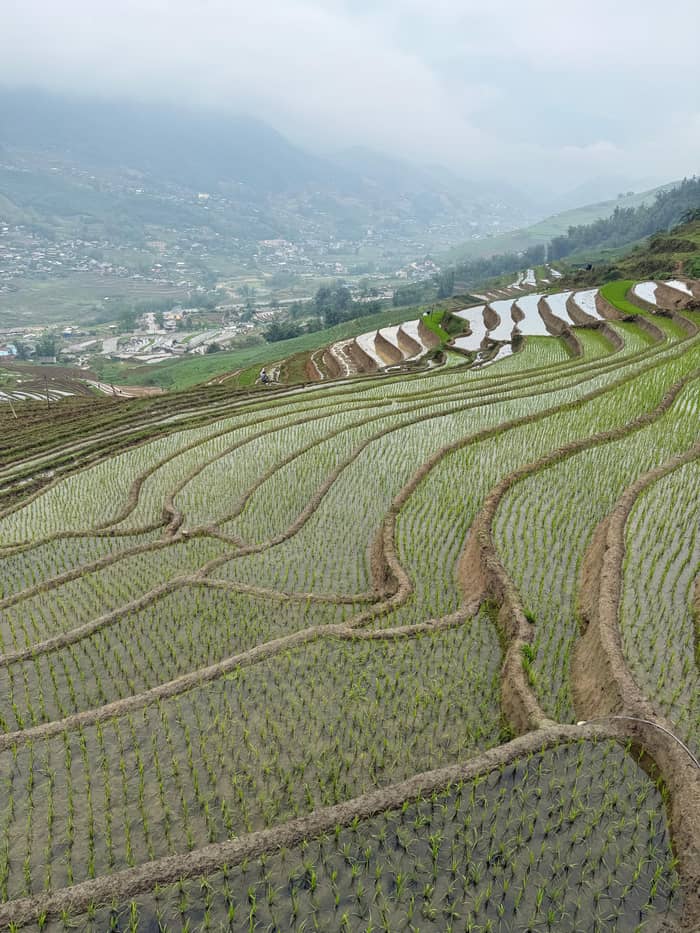
6 hours in the valley
Overnight
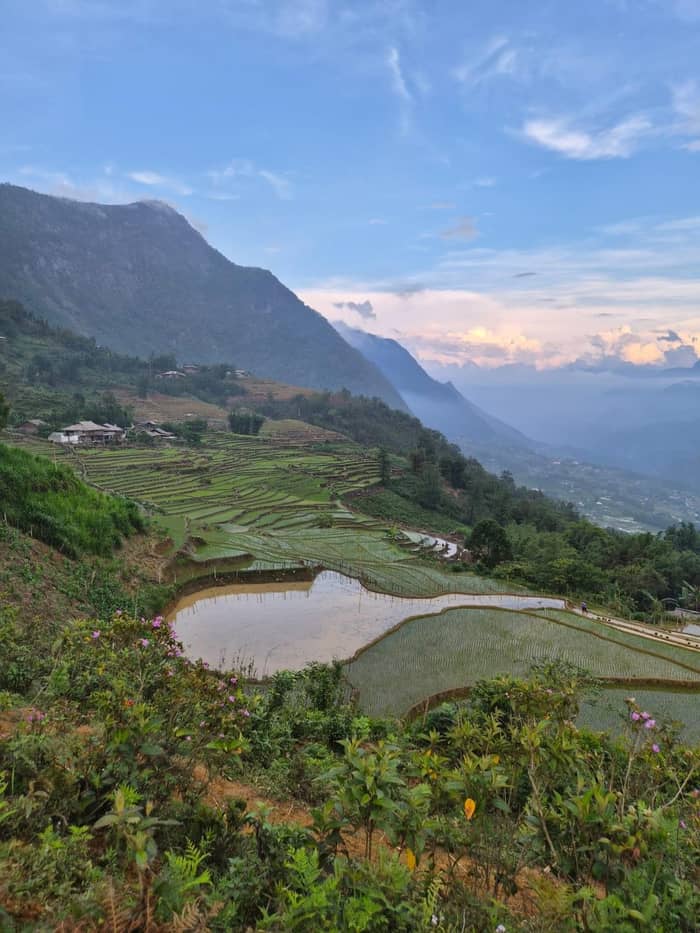
2 days in the hills
Longer
3 days with homestay
Sun is easy to forget on a cool day in the hills. Several listings ask for sunscreen and sunglasses, and the booked trek's day 1 crosses open terraces and fields after lunch. Choose a hat with a chin strap, and reapply your sunscreen at the house in the evening, after you shower, if you plan to walk again in the morning. Sun can burn on a cool day, and open terraces give little cover between the villages.
For insects, follow the authority's advice: use repellent containing DEET and wear light, long-sleeved clothing in the evening to prevent mosquito bites.8 A valley listing and a 2-day listing both ask you to bring insect repellent. A small bottle is enough for the weekend, and a roll-on is easier to use with wet hands than a spray. Check your legs for ticks after walking through grass, and keep the repellent where you can reach it in the evening.
Carry a small medical kit. Official advice covers the basics: buy travel insurance, carry all the prescribed medicine you need because some is hard to find in Vietnam, and expect the nearest pharmacy or hospital to be far away in rural areas.13,9,15 Drink bottled water and skip the ice, as the authority also says.16 Plasters, blister tape, rehydration salts and a basic painkiller will do the rest.
Price your trek
Enter your party size and compare four treks at their from-prices.
Compare 4 alternatives
Enter your party size and compare four treks at their from-prices.
≈
View≈
View≈
View≈
ViewAll amounts are from-prices on GetYourGuide, converted at the ECB reference rate. Exact prices are shown at booking.
Pack day by day
At pickup
Your pickup comes at dawn, 6:00 to 6:45 AM, so pack the night before.
On the bus
The sleeper bus is air-conditioned, so keep a light layer within reach.
In Sa Pa town
Large luggage is stored safely in town and the trek goes ahead without it.
On the trail
Carry water, sunscreen and mosquito spray for the 12 km hike.
At the house
Shoes come off at the door and the bathroom is shared, so keep toiletries handy.1
Next day
Pack again before breakfast; the bus home goes at 15:00.
Cash is easy to under-pack. A Ta Van listing tells guests to carry dong, noting that banking in Sa Pa can be unreliable, and adds that US dollars, euros and Australian dollars are also accepted. The tourism authority adds that it is a good idea to withdraw extra cash before travelling to remote destinations, above all for anyone planning to buy crafts or textiles straight from the makers.17 Small notes make life easier in a village.
Keep your valuables close. The authority's advice for the countryside is to watch your bags and keep large sums of cash and costly gadgets out of sight.14 Take a photocopy of your passport on the trail and leave the original in the Hanoi hotel safe or the bag stored in Sa Pa town. A zipped pocket inside the day pack is better than a loose one on the outside, and a small waterproof pouch keeps your cash and papers dry on a wet day.
Phones need two things. A phone number that works on a messaging app: the long 1-day trek and the Ta Van trek both ask for a WhatsApp or similar number so the operator can reach you. And a power bank: the records do not say whether the houses have power or signal, so assume neither and charge in town. Save the operator's number and the pickup point offline before you leave the hotel in Hanoi.
Video
Alina Mcleod on YouTube · Tap play to load the video; not before.
When jungle trekking, be wary of ticks, leeches and poisonous snakes lurking in the undergrowth. Seek medical assistance immediately if bitten.
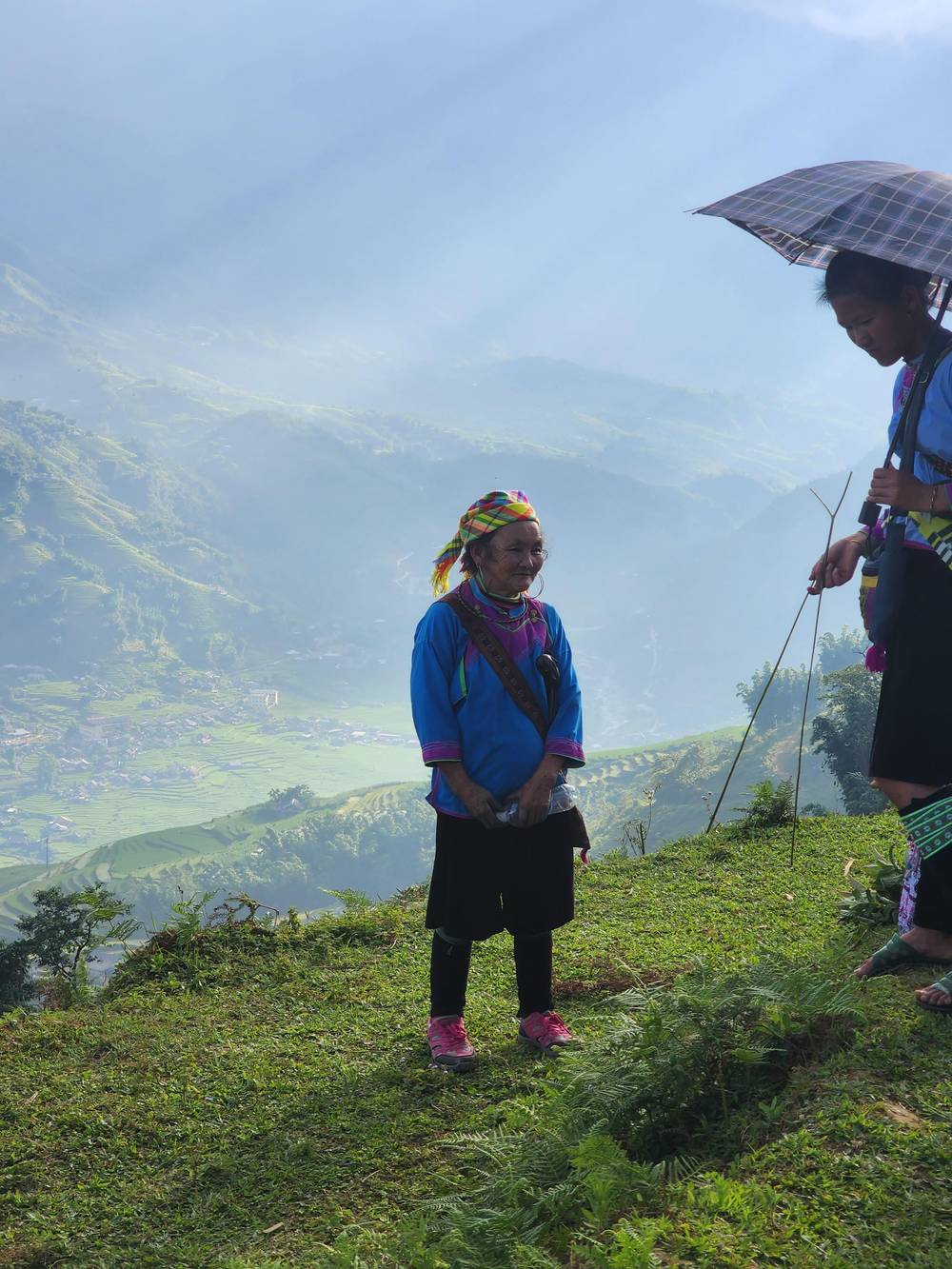
Bring a small gift for your host: sweet snacks, fruit, flowers or a bottle of soft drink, and nothing black, as the authority advises.10 It costs little, weighs little and starts the evening well, and it gives the guide an easy way to introduce you to the family. Sweets for children are another matter: ask your guide before handing anything to a child, and never as a reward for a photograph.
Photography needs manners. The authority advises asking before lifting the camera, since most people will be fine with a photo but privacy comes first.18 One valley listing asks guests to get a parent's permission before photographing a child and never to touch a child's head. A Black Hmong guide on the authority's site suggests asking a seller how long a piece took before settling on a fair price.19
Leave behind what you will not use: the big bag, a laptop, spare shoes, jewellery and any document you do not need on the trail. Ask your Hanoi hotel to hold what you leave, and know that the booked trek stores large luggage in Sa Pa town as well. On day 2 you pack again before breakfast, since the route carries on and the bus back to Hanoi departs at 15:00. A pack that was neat on day 1 will not be neat on day 2, so keep wet and dry items apart in separate bags.
FAQ
The booked trek stores large luggage in town, and listings ask for trekking shoes, sunscreen, repellent and a raincoat.
VNA notes a lot of rain from May to August, and listings advise a raincoat or poncho.2
A listing advises a warm jacket from November to February, and the authority says Sa Pa is much cooler from late December until March.11
One Ta Van listing recommends carrying dong and warns that banking in Sa Pa is unreliable.
The booked trek stores large luggage in Sa Pa town and the trek is done without it.
The listing also advises a raincoat or poncho and a light jacket.
The authority gives this advice for a family visit, along with a greeting for the elders first.10
Sources
Planning two days in the Sa Pa hills? Ask a real person here.