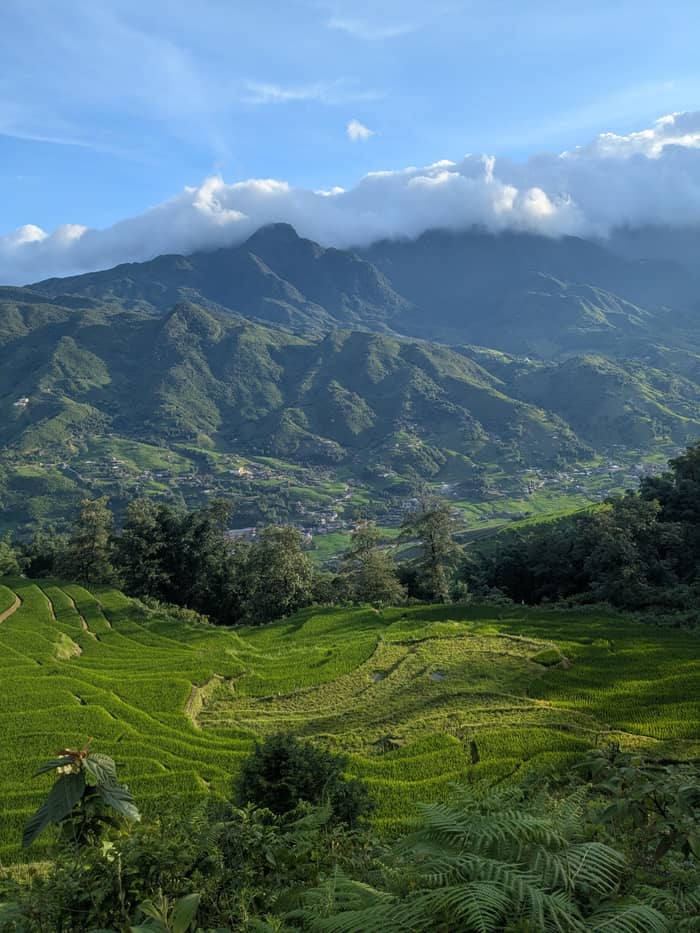
Booked here
Guide's house on the trek
Hanoi sleeper bus both ways
- NightGuide's house
- BathroomShared
- PickupOld Quarter
- MealsLocal meals
Guides
Language
Currency
See open datesfrom $72 · free to cancelHands-on checklist
12-item checklist
Mark each item when done. Progress is stored on this device.
0 / 12 ready
Everything is ready. Pick your date for the valley, and the rest is settled.
Save a placeWhat actually happens between the walk on day 1 and the bus on day 2: the house, the bathroom, dinner with the host family, the morning meal and the manners that make a good guest.
Editorial team, sapa2daytrek.top · Updated November 17, 2026 · Allow 9 min
Overview
Sapa homestay trekking ends the walking day in a family's home. In the mountain districts around Sa Pa and Mai Chau the national tourism authority pictures guests bedding down in rustic wooden lodges and longhouses, and its Sa Pa page adds that the town has excellent lodges and homestays among the terraces, where visitors brush shoulders with farmers.5,6 Expect a house first and a guest room second.
A good homestay, in the authority's description, is clean and comfortable, with fresh bedding, shared baths and spots to relax outdoors, and the rooms may be separate or shared while guests still feel safe and part of the place, so treat the rooms as a family's spare beds and not as a hotel inventory.2,1 That is a fair way to set your expectations: warm, plain and close to the family. Do not expect hotel staff, a minibar or a quiet floor to yourself.
On this site's trek the bed is at the local guide's own house, reached after a 12 km first day and a waterfall break. The listing says plainly that the bathroom is shared, as the local family shares it every day, and presents the evening as part of the experience. The authority's advice for a night of this kind is to choose an ethnic village or homestay, which it says gives a deeper appreciation of the region's culture and scenery.7
Compare the nights
| Listing | Where you sleep | Bathroom and extras | Host or route |
|---|---|---|---|
| Booked trek | The guide's house | Shared bathroom; cook with host | Hau Thao side, day 1 |
| Small group from town | Family homestay in Ta Van | Shared or private room, hot shower | Hmong family |
| Walk with a local guide | Black Hmong homestay | Dinner with the hosts | Giang Ta Chai Mong |
| Hmong-run trek | Local homestay | Shower, optional cooking | Hau Thao |
| Dzay homestay trek | Dzay ethnic homestay | Dinner and breakfast | Ta Van |
| Hotel version | Hotel in Sa Pa town | Check-in from 13:30 | Limousine transfer |
Each row restates only what the cited listing records state; ask the operator about heating, noise and signal, which the records do not mention.
The first hour in a house is the one that sets the tone. The authority's etiquette guide says to take your shoes off just outside the door, to greet the older members of the family first, to shake hands with your right hand and to offer plenty of smiles.8,10 Ask the guide where to leave your shoes and where the guest bed is before you wander through the house. Ask before you photograph anyone inside, too: the authority says most people are fine with a photo once they are asked, but privacy comes first.11
Altars deserve a word. Families keep altars in their houses, some of them at ground level, and the authority asks visitors not to step over one or cross directly in front of it.12 The VOV profile of the Giay adds that the centre of the ground floor in a Giay house holds the ancestral altar and the guest room, so you may sleep close to one.13 The same guide that shows you the bed will show you where to walk.
Bring something small for the host. For a family visit the authority recommends biscuits or cake, fruit, flowers or soft drinks, and its one prohibition is anything black. A gift is a courtesy, not a payment, so keep it modest.14 You will also have walked without your big bag: the booked trek leaves large luggage safely in Sa Pa town, while a Hmong-run trek parks it at a hotel in town and wants only the essentials on your back.
Homestays in Ta Van
Dinner is the centre of the night. The authority says that in most homestays there is no menu and you eat what is prepared, and that dinner is usually a large meal of vegetable, seafood and meat dishes served family-style with steamed rice.3,9 Tell the host in advance if you eat no meat or have an allergy; the same authority says you can mention dietary preferences, and listings of the two-day treks offer vegetarian options.3
Sapa trekking and homestay listings turn the evening into a lesson. The booked trek offers a chance to help the host cook dinner and learn local dishes while sharing stories. A competing listing describes an informal cooking session with the host family, a hot shower first and dinner with local rice wine, called happy water, and a second one adds simple games. The authority lists tea and rice wine among the usual ways hosts welcome guests.18
What you eat is local. A Black Hmong guide quoted by the authority says families grow their own food and cook everything fresh over the fire, and that the way to taste Sa Pa food is to trek with a local family, who shop at the market for ingredients and cook them in their own kitchen.19,20 Ethnic families, says the authority, eat mainly herbs and vegetables, river fish and smoked buffalo meat.21 Eat what you can and say what you cannot; a clear refusal is kinder than a half-eaten plate.
Your night
Choose the evening you picture and the matching version follows.
If I want a family evening and local cooking
The booked trek
The night is at the guide's house, with dinner and an optional cooking hour, from $72.
If I want a lower fare and will book my own bus
A homestay trek from town
A 2-day listing from Sa Pa town starts from $41.
If I want a hot shower and a private room
A homestay with rooms to choose
One listing offers private rooms with a shared bathroom and a hot shower.
If I want a hotel bed and a limousine
A hotel version
The limousine version with a hotel starts from $189.
If I eat no meat
Any version, with notice
Listings offer vegetarian options, and the authority says to tell your host in advance.3
Nights compared
Booked here
Hanoi sleeper bus both ways
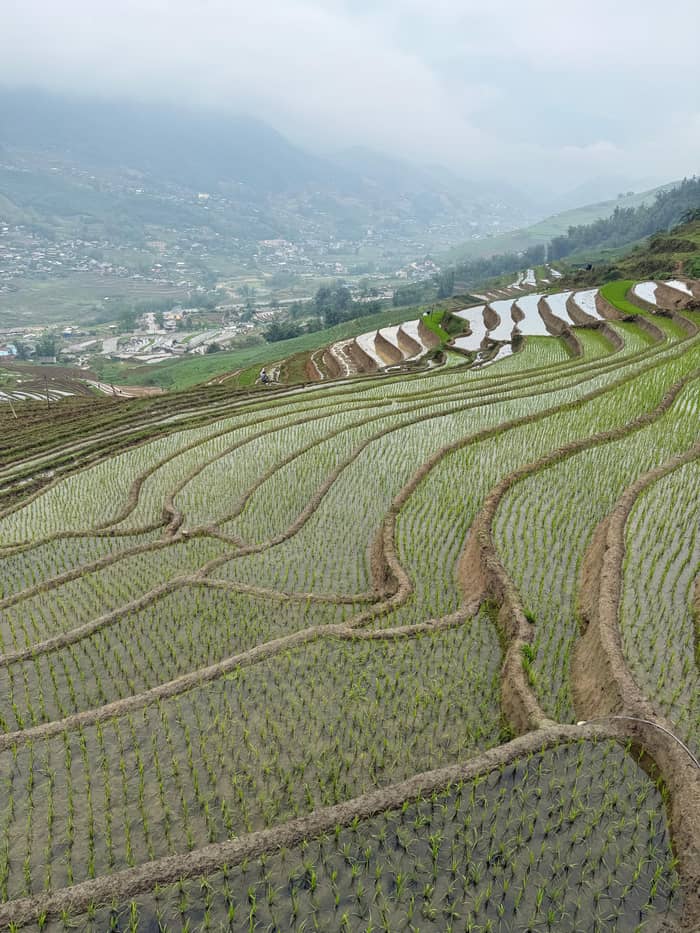
Homestay
Starts in Sa Pa town
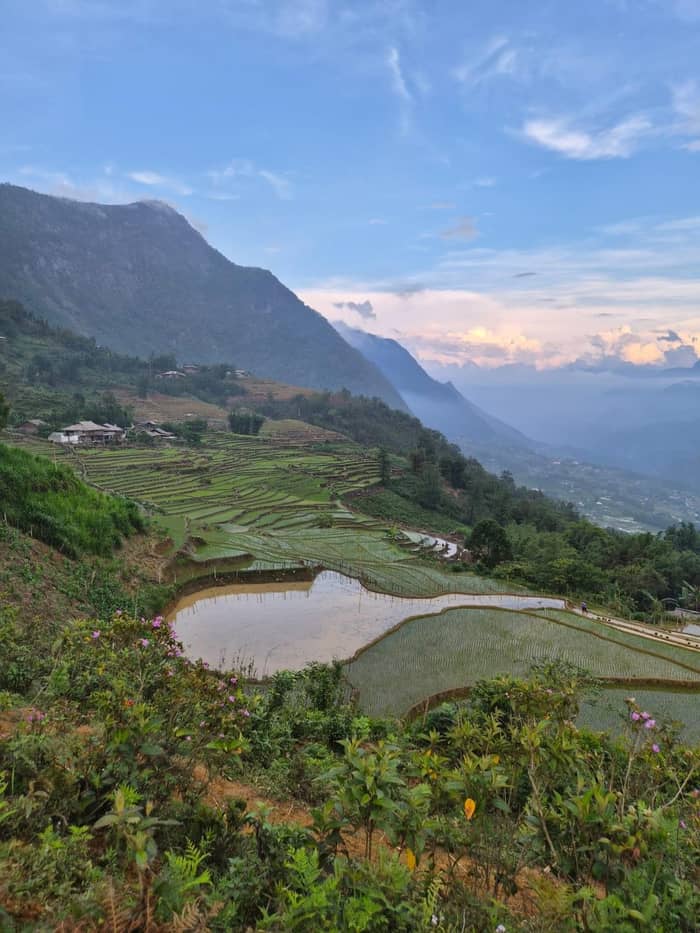
Hotel
Hotel in Sa Pa town
The listings are honest about what is simple. The listing for our trek says the bathroom is shared, a Hmong-run trek offers a shower at the homestay after the walk, and the Ta Van rice-terrace trek calls its homestay basic. If hot water matters, ask when it is available and for how long. The wording on a listing is short, and a message to the operator about hot water, heating and where the bathroom sits clears up worries before you leave Hanoi.
Another listing offers rooms either shared or private with a shared bathroom, and says couples always get their own private room, with a hot shower after day 1. That is the best answer to the privacy question among the records checked: ask your operator before you pay whether you will be in a shared room or a private room. The authority's wording, fresh bedding and shared baths, is the safest model to expect, and anything a listing promises beyond that is a bonus.
Cold is the other thing to plan for. One 2-day listing flags cool nights from November to February and a warm jacket. On the authority's reading the northern hill towns, Sa Pa included, stay far cooler than the rest of Vietnam from late December to March.24 Ask whether blankets are supplied, and pack a warm layer to sleep in. The records do not say anything about noise, power or phone signal in the houses, so ask your operator, and carry a power bank.
Price the night
Add your travellers and compare the homestay versions at their from-prices.
Compare 4 alternatives
Add your travellers and compare the homestay versions at their from-prices.
≈
View≈
View≈
View≈
ViewAll amounts are from-prices on GetYourGuide, converted at the ECB reference rate. Exact prices are shown at booking.
The evening and the morning
Late afternoon
The group reaches the guide's house after the 12 km walk and is welcomed like family members.
Before dinner
Take your shoes off at the door, then rest, and use the shower where one is offered.8
Cooking hour
If you want, talk to the host and help cook dinner to learn the local dishes.
Dinner
A large meal of vegetable, seafood and meat dishes is served with steamed rice, and rice wine may follow.9
Night
Nights in Sa Pa can be cool from November to February, so sleep in a warm layer.
Next morning
You cook breakfast with the host and choose a longer hike or time on the fields.
The morning gives the homestay its best hour. The booked trek has you start the day early by cooking breakfast with the host, then pick either a hike on to more distant villages and a bamboo forest, or a spell among the fields where you may try harvesting, planting or tending plants. A Hmong-run trek serves breakfast at the house, then walks to Giang Ta Chai along the Muong Hoa stream.
Sapa trekking homestay mornings follow the weather. If the day brings severe weather, the booked trek's guide may arrange a minivan transfer to the homestay and a longer second-day route when it clears. A waterfall stop on the route can run light in dry months, according to a 2-day listing. Pack your bag before breakfast, since the route continues after the meal and the bus back to Hanoi leaves Sa Pa at 15:00.
Say your thanks properly. On tipping, the authority notes that guides and spas see it more often than restaurants do, and that nobody is obliged to leave one.25 If your host helped and the service warranted it, a tip to the guide is one way to say thanks, and a kind word to the family matters as much. Leave your room as you found it, and ask the guide to pass on your thanks if the host is already out in the fields. Pay any extras in cash, and read the money section below before you set out.
Video
Lily's Travel Agency on YouTube · Tap play to load the video; not before.
The best homestays in Vietnam are always clean and comfortable, with fresh bedding, shared baths, and areas for guests to relax out of doors.
Hosts differ by village. On the authority's own site a Black Hmong guide describes leading guests up to her house, where they stay and watch the family at work.26 One listing puts the night in a Black Hmong homestay at Giang Ta Chai Mong, another in a Dzay homestay and a third in Ta Van. Hmong, Dao, Tay and Giay families are the communities Nhan Dan says a Ta Van visitor can meet.27
The scale is local. According to Nhan Dan, more than 40 of the 140 households in one Ta Van hamlet are registered homestays with room for 10 to 20 guests each, and the wider district has 154 homestays in four communes.15,17 In the peak season the Ta Van homestays can welcome 200 to 300 tourists a day on average, and one group there is among five homestay groups in Vietnam to win an ASEAN prize.16,28 Those figures describe one commune and its busiest weeks, so a night elsewhere in the valley may be quieter or plainer.
Where your fare goes is worth asking. A night with an ethnic family tops up the modest income it earns from farming, the authority points out, and some homestays also run tours and workshops that feed the whole village.4,29 It also recommends a company that is locally owned and sustainable.30 Ask which house you will use and how its family is paid. Carry Vietnamese dong in small notes, because a Ta Van listing cautions against relying on banking in Sa Pa.
The same valley can be walked with very different beds. A 2-day listing starting in Sa Pa town begins from $41 with a homestay night and local meals, and the Hanoi trek this site books, bus both ways, begins from $72. Compare what each fare includes before you compare the numbers. A hotel version with a limousine transfer starts from $189, and a premium package with a hotel from $102.
Much of what the extra money buys is comfort and logistics. The hotel version sleeps in Sa Pa town, with check-in from 13:30, and its day-2 trek of 9 to 12 km is described as challenging for older guests. The premium package makes day 2 a choice between Fansipan and the Y Linh Ho, Lao Chai and Ta Van trek, and says the Hanoi transfer has no guide. Neither version changes the paths, only where you sleep and how you travel.
Choose the homestay if the family evening is the reason you came. Choose a hotel if you want a private bathroom, a heated room and a bed you know in advance. Either version walks the same paths in the daytime, and the authority's own advice for a deeper visit is a village stay.7 The comparison table and cards below put the main versions side by side, and the calculator prices them for your group size.
FAQ
The booked trek walks 12 km on day 1 and sleeps at the local guide's house, with a shared bathroom.
The authority says homestays have separate or shared rooms, and one listing offers shared or private rooms with a shared bathroom.1
One listing mentions a hot shower on arrival, another a shower at the homestay, but ask your operator.
Listings offer vegetarian or vegan meals, and the authority says to tell the host your dietary preferences.3
Hotel versions start from $102 and $189, while the town trek and the Hanoi trek are priced as above.
Sources
Planning two days in the Sa Pa hills? Ask a real person here.